Journal · Essay
Still Home: what stays with you
An essay on the emotional landscape of Lebanon: what remains when everything collapses, the country the world refuses to see, and why home is not where you stay.
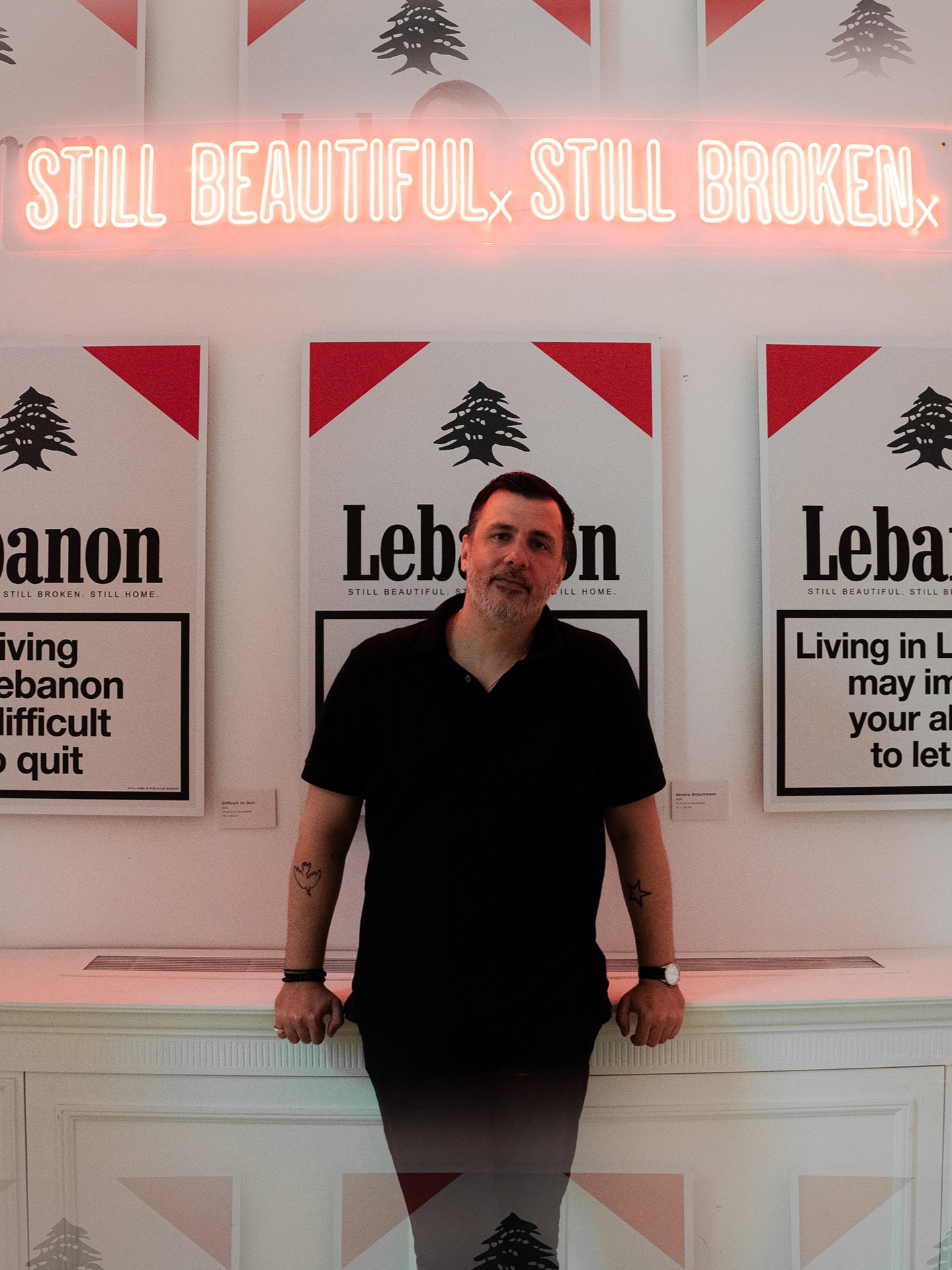 By Elias MarounJuly 2026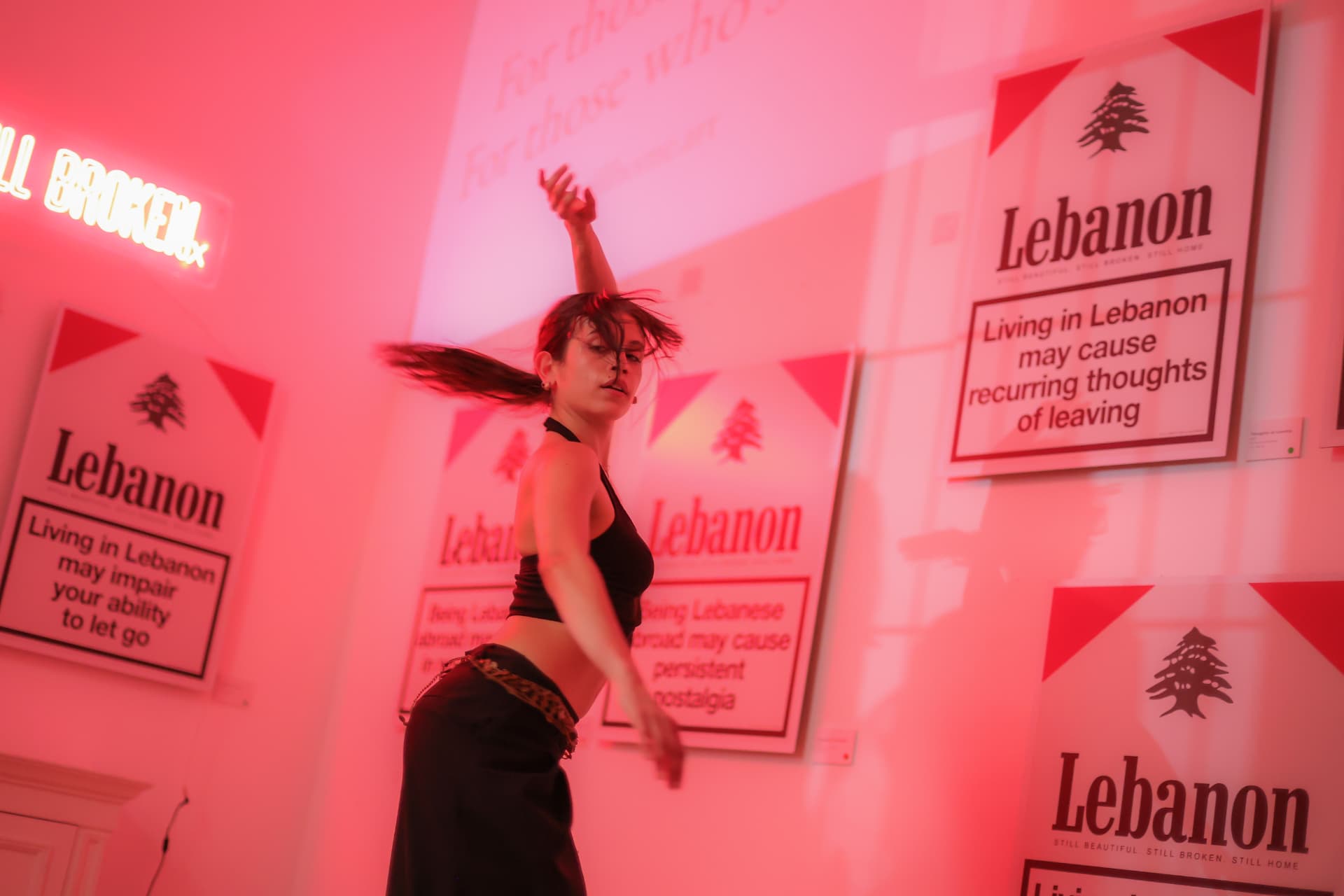
Dance performance by Mira Majzoub, July 2026 - Photo Jovani Feghaly
I think I'm trying to preserve something that is slowly disappearing: the emotional relationship people have with Lebanon. Not the Lebanon of headlines, but the one that lives in memory, contradiction, habit, and attachment. If there is something I'm trying to guard, it's everything that makes loving Lebanon both beautiful and difficult to explain.
What remains when everything collapses
We often speak about Lebanon through politics, economics, or conflict. But underneath the headlines exists another country: the memories, contradictions, habits, and attachments that continue to shape who we are. This work is an attempt to preserve that emotional landscape — the one that makes loving Lebanon both beautiful and difficult to explain.
When everything else seems to collapse, what remains? Our ability to care for one another. To create, to celebrate, and to keep building a future despite everything. Lebanon has always been more than its institutions. What survives are conversations around a table, music, generosity, humour, creativity, and an extraordinary capacity to adapt. These things cannot be measured, but they are what keep the country alive.
The Lebanon the world doesn't see
The world rarely sees everyday life. It does not see artists continuing to create, people opening new cafés, musicians rehearsing, families celebrating birthdays, strangers helping each other, or friends laughing together despite everything. Lebanon is not only resilience. It is also culture, absurdity, hospitality, humour, creativity, and an incredible desire to keep living. Those ordinary moments are perhaps the country's greatest act of resistance.
A country of a million facets
Lebanon cannot be reduced to a single object, place, sound, or smell. If it were an object, it would have millions of facets. Every corner of the country feels different — the mountains, the sea, Beirut, Tripoli in the north, the villages of the south, the Bekaa, Baalbek. Each has its own rhythm and identity. Lebanon isn't one destination; it's a journey made of countless destinations.
When I think of Lebanon, my mind becomes a chorus. The first sound is the explosion of August 4th — a sound that has become part of the collective memory. Then come the unsettling hum of drones and bombs, the constant buzz of people talking over one another, the traffic, the call to prayer, church bells, and the sea. And above all, there is music. From Fairuz and Ziad Rahbani to Soap Kills, Yasmine Hamdan, and Mashrou' Leila, they tell the story of a country no single voice could ever tell alone. Within them, you can hear nostalgia, joy, rebellion, love, melancholy, and hope.
Even smell is impossible to define. It is the scent of pine forests after the rain mixed with the exhaust fumes of the city. It is jasmine, salt from the Mediterranean, and sometimes pollution. Beauty and chaos coexist.
If there is one thing every Lebanese person might agree on, however, it is the taste of the food. Wherever Lebanese people go in the world, food is one of the first ways they reconnect with home. It has an incredible power to bring them back.
To leave or to stay
I have experienced both. I left Lebanon twice, lived abroad, and eventually came back. That journey made me realize that leaving is not the opposite of belonging. Whether people stay or leave, they often carry the same questions, the same guilt, the same hope, and the same attachment. Geography changes, but home remains an ongoing conversation.
A bridge, not a border
The line "For those who left. For those who stayed" was never intended to separate people into two categories. It was created to remind us that, despite different lives and different choices, we often carry the same emotional weight. Whether you left or stayed, Lebanon continues to shape you in ways that are difficult to explain. The exhibition is an invitation to recognize ourselves in one another.
The image of the warning label
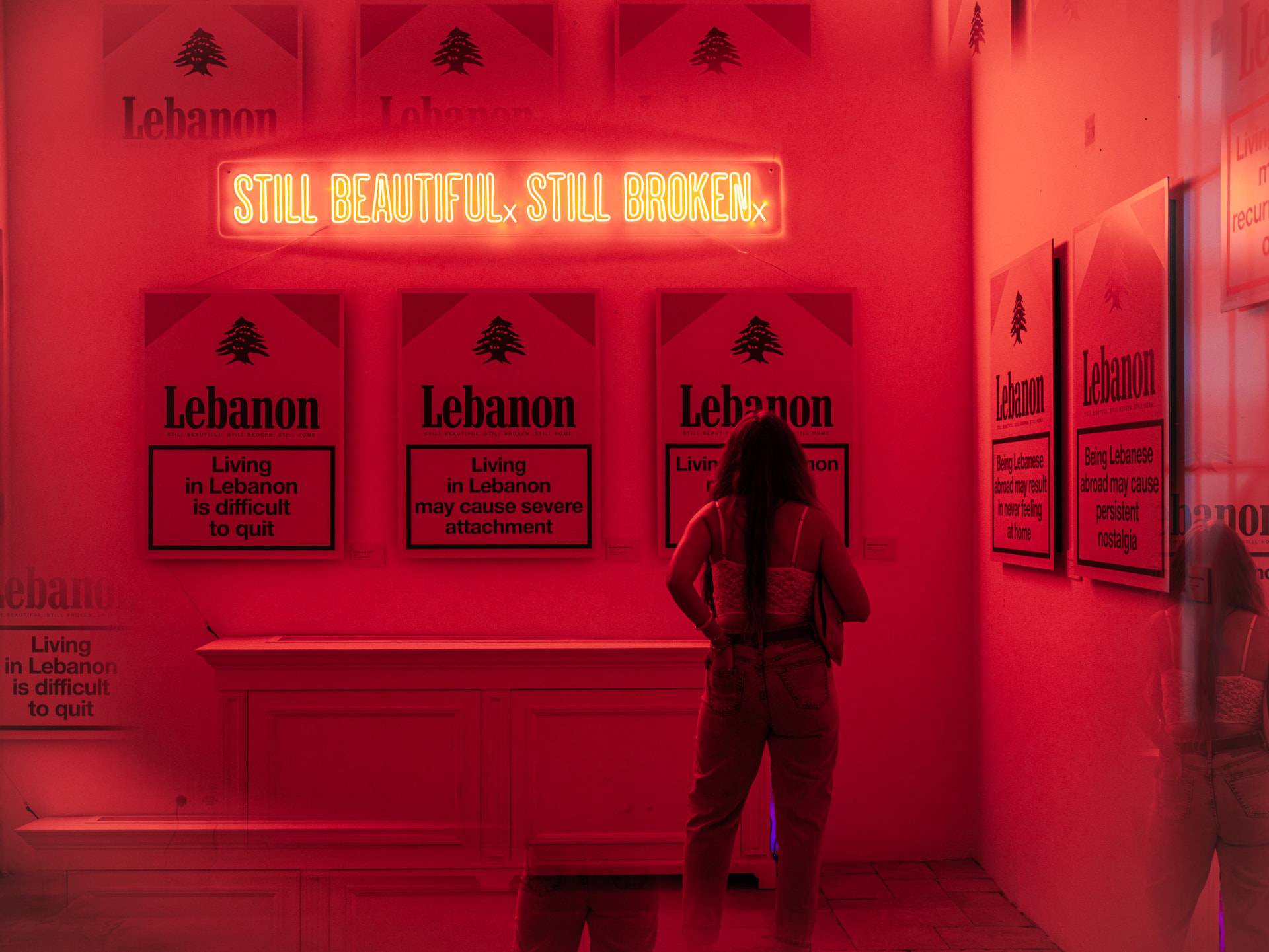
The first collection reads the visual language of cigarette warnings into the idea of home — an attachment that is at once beautiful and harmful, one you cannot quit. Where did that image come from?
It began as something deeply personal. For years, I struggled to understand my own relationship with Lebanon. I loved it, yet it had given me countless reasons to leave. Even after living abroad, I realized that Lebanon never really left me. I kept coming back, physically or emotionally. That contradiction became impossible to ignore.
The work did not begin as an artistic idea. It began as a personal necessity. One day, I realized that the language I was using to describe my relationship with Lebanon sounded strikingly similar to the language of addiction: "I can't quit. I can't let go. I know it's hurting me, but I still love it." That is when the idea of using cigarette warning labels emerged.
The first artwork was not intended to become a collection. It was simply an attempt to give form to a personal dilemma. But after I shared it on social media, I was overwhelmed by the response. I realized I was not describing only my own story — I was describing something many people shared. That was the moment Still Home became no longer only my story.
Still Home: place, memory, or wound?
If this project has taught me anything, it is that home isn't something you either have or lose. It is something you keep negotiating with. And perhaps that negotiation never really ends.
Like any relationship, it evolves. Some days it feels close; other days, distant. Sometimes it comforts you; sometimes it disappoints you. Sometimes it exists as a place, sometimes only as a memory, and yes, sometimes as a wound.
Still Home is not about defining what home is. It is about accepting that our relationship with it is constantly changing. It asks whether home is something we leave behind — or something that never really leaves us.
Home is not where you stay. It is what stays with you.
Explore the project
Thirteen text works about the country as a substance one cannot quit. Printed on museum-grade paper, signed and open editions.